

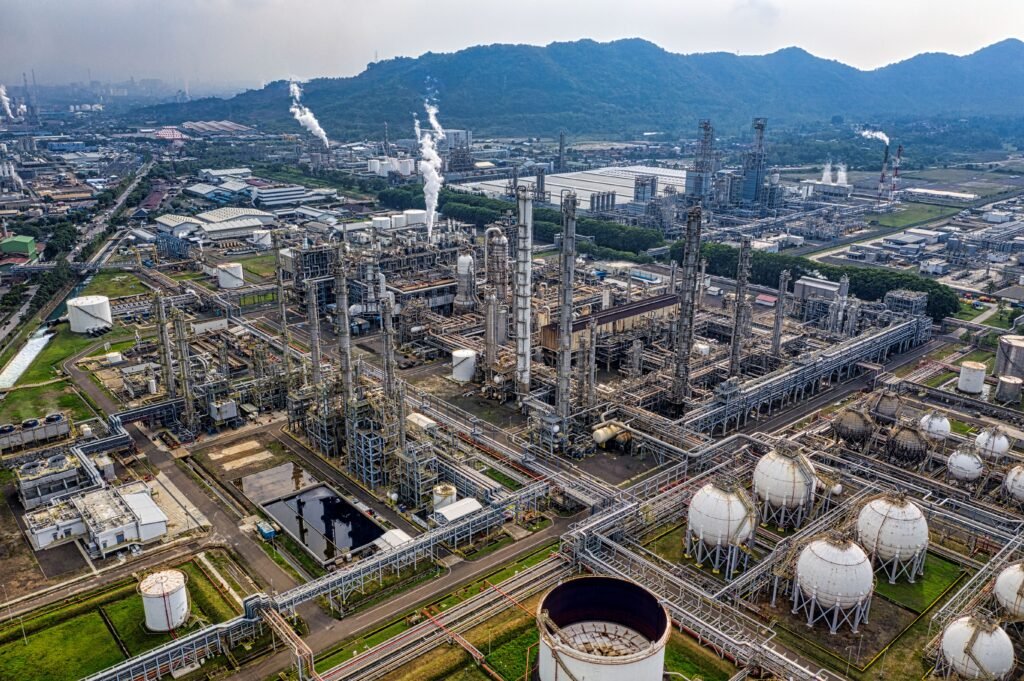
Petrochemical plants run on extremes. Reactors, distillation towers, and cracking furnaces routinely operate at temperatures where a small measurement error isn’t just inconvenient — it can mean a process upset, a damaged unit, or worse. In environments filled with flammable vapors and corrosive chemicals, the humble high temperature thermocouple carries more responsibility than its size suggests.
This is where the high temperature thermocouple comes in. It’s one of the most widely used tools for monitoring heat in demanding industrial settings, precisely because it’s built to keep working when conditions get harsh. But not every thermocouple is designed for petrochemical duty, and choosing the wrong one — or letting an old one run past its useful life — is a risk many plants don’t realize they’re carrying until something goes wrong.
In this article, we’ll walk through what makes petrochemical environments so tough on temperature sensors, what published engineering research tells us about how these sensors actually fail, and what to look for in a high temperature thermocouple built for this kind of work.
What Makes Petrochemical Environments So Demanding
Most industrial settings ask a temperature sensor to do one difficult job. Petrochemical plants often ask for three or four at once.
- Extreme heat. Cracking furnaces and reactors can run well above 1000°C, conditions that degrade ordinary metal sensors over time.
- Corrosive exposure. Sulfur compounds, hydrocarbons, and process chemicals attack sensor sheaths, shortening their working life.
- Flammable atmospheres. Any electrical component near hydrocarbon vapors needs to be engineered so it cannot become an ignition source.
- Continuous operation. Many process points can’t be shut down for a quick sensor swap, so reliability isn’t optional.
This isn’t just a theoretical concern. A documented case in the petroleum refining industry examined a thermocouple that failed inside a sulphidation reactor after it was installed without its protective sheath, exposing it directly to hydrogen sulfide gas at high temperature (Rana et al., 2015). The investigation found that the sensor material broke down through a chemical reaction with the sulfur-bearing gas, starting at around 400°C and accelerating sharply above 780°C. It’s a clear reminder that even a well-made sensor depends on proper installation and protection to survive its environment.
What Is a High Temperature Thermocouple, Exactly?
A thermocouple is a simple but clever device: two different metal wires joined at one point, generating a small voltage that changes with temperature. That voltage is translated into a temperature reading by a connected instrument.
A high temperature thermocouple is simply one engineered to keep that measurement accurate and stable at the upper end of the temperature scale — often 1000°C to 1700°C or more, depending on the type and materials used.
Common types you’ll come across in petrochemical settings include:
- Type K and Type N – reliable, cost-effective options for general high-heat monitoring in oxidizing conditions.
- Type S, R, and B – noble metal (platinum-based) thermocouples used for the highest temperature ranges, where accuracy and stability matter most.
- Ceramic-sheathed and mineral-insulated (MI) designs – built to resist both heat and chemical attack in the harshest process points.
The right choice depends less on temperature alone and more on the full picture: what’s in the atmosphere, how corrosive the process is, and how critical continuous, stable readings are to safe operation.
Signs a Standard Sensor Isn’t Up to the Job
Plants don’t always realize a sensor is struggling until a problem shows up downstream. A few warning signs worth watching for:
- Drifting readings – Temperature values that slowly become less accurate over weeks or months, often from corrosion or material breakdown inside the sheath.
- Frequent replacements – If a sensor at a particular process point keeps failing faster than expected, the design likely doesn’t match the conditions.
- Slow response times – In fast-changing processes, a sluggish sensor can report a temperature that’s already out of date, delaying operator response.
- Non-rated equipment in hazardous zones – Using a sensor without proper explosion-proof or intrinsically safe certification in a flammable atmosphere is a compliance and safety gap, not just a technical one.
Not every failure announces itself with obvious corrosion, either. A metallurgical investigation into thermocouples used at a chemical processing plant found that some had failed through creep cavitation, a form of internal material damage caused by prolonged exposure to heat combined with mismatched thermal expansion between the sensor’s internal wires and its outer sheath (Rakshan Kumar et al., 2023). The wires had essentially fatigued from the inside, with no external warning sign, before eventually snapping. It’s a useful reminder that sensor age and cumulative heat exposure matter just as much as visible wear.
What to Look for When Choosing a High Temperature Thermocouple for Petrochemical Use
If you’re specifying or replacing a temperature sensor for a petrochemical application, a few practical criteria make the decision easier:
Material and sheath construction
Look for sheath materials suited to the specific corrosive agents in your process — stainless steel for general use, and higher-grade alloys or ceramic protection tubes for more aggressive or higher-temperature conditions. Research on mineral-insulated, metal-sheathed thermocouples exposed to acidic, corrosive conditions found that the location of any damage to the protective sheath had a measurable, statistically significant effect on how much service life remained before failure (Kumar et al., 2025). In practical terms, this supports routine visual inspection of sheaths and thermowells, since even small, localized damage can shorten a sensor’s remaining lifespan more than expected.
Hazardous area certification
For any location where flammable vapors may be present, confirm the sensor carries appropriate certification (such as ATEX or IECEx) for explosion-proof or intrinsically safe operation.
Response time and accuracy
Faster-responding junctions help operators and control systems react to changes in real time, which matters most in reactors and other fast-moving processes.
Documentation and traceability
A calibration certificate and material test report aren’t just paperwork — they’re what lets your team verify a sensor meets the standard your process actually needs, and they matter during audits or incident investigations.
Serviceability
Modular designs that allow the internal sensing element to be replaced without swapping the entire assembly can meaningfully reduce maintenance costs over the sensor’s lifetime.
This is the kind of thinking behind products like EMCEE’s thermocouple range, which is built around exactly these demands — reliable sensing designed to hold up under the conditions petrochemical processes create.
Why Getting Right High Temperature Thermocouple Pays Off
It’s easy to think of a thermocouple as a minor line item in a much larger process. In practice, published failure analyses consistently show it’s one of the few components standing between a stable process and an unplanned incident.
Plants that invest in the right sensor for the right application tend to see:
- Fewer unplanned shutdowns caused by sensor failure
- More accurate process control, which supports both safety and product quality
- Lower long-term maintenance costs, since well-matched sensors last longer
- Easier compliance during safety audits, thanks to proper certification and documentation
None of this requires overhauling your entire instrumentation setup. Often, it’s a matter of reviewing the sensors at your most critical or highest-risk points and confirming they’re genuinely built for the job.
Keeping Your Sensors Working for You
A few simple habits go a long way toward getting reliable performance out of any high temperature thermocouple:
- Schedule regular calibration checks, especially for sensors in continuous, high-stakes service.
- Keep a record of installation dates and expected service life so replacements happen proactively, not after a failure.
- Work with suppliers who can provide clear certification and test documentation, so your team isn’t left guessing during an audit.
- Review sensor specifications whenever a process changes — a shift in chemical composition or operating temperature can quietly push an existing sensor outside its safe operating range.
Final Thoughts
Temperature measurement in petrochemical environments isn’t a place to cut corners. The combination of extreme heat, corrosive chemicals, and flammable atmospheres means a well-matched, properly certified high temperature thermocouple does more than report a number — it supports the safety and stability of the entire process around it, a point borne out repeatedly in engineering failure analyses of real industrial incidents.
If you’re reviewing your plant’s current sensors or specifying new ones, it’s worth taking the time to match the sensor to the actual conditions it will face, not just its temperature rating on paper. A little diligence here tends to pay for itself many times over in fewer failures, safer operations, and smoother audits.
Want help identifying the right thermocouple type for a specific process point? Feel free to reach out to our team for guidance.
References
Kumar, V. D., Bhattacharyya, A., Behera, R. P., M, K., & Prabakar, K. (2025). Degradation and residual life assessment of thermocouples with damaged sheaths in corrosive environments. Journal of Instrumentation, 20(1), Article P01002. https://doi.org/10.1088/1748-0221/20/01/p01002
Rakshan Kumar, J. K., Bhattacharjee, D., Dsilva, P., Praveen, R., & Hegde, S. R. (2023). Creep cavitation damage of K-type thermocouples. Engineering Failure Analysis, 143, Article 106846. https://doi.org/10.1016/j.engfailanal.2022.106846
Rana, M. S., Ravindranath, K., & Tanoli, N. (2015). Degradation of thermocouple in a temperature programmed sulphidation reactor. Engineering Failure Analysis, 55, 79–86. https://doi.org/10.1016/j.engfailanal.2015.05.012